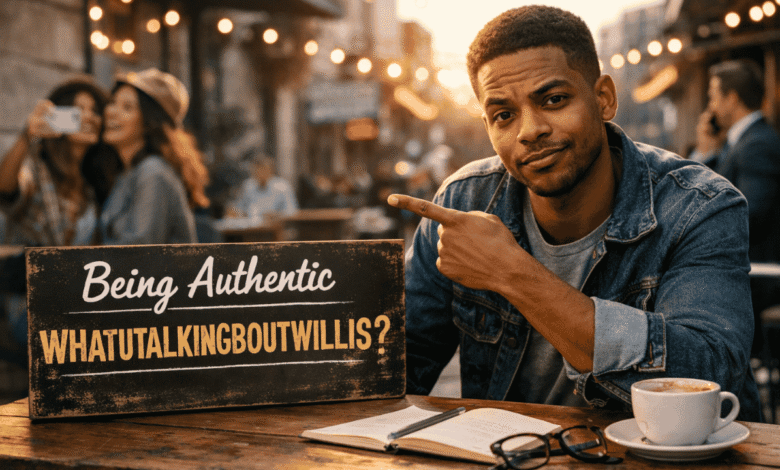
I’m tired of watching people bend themselves into shapes they don’t recognize just to stay comfortable. The whole point of being authentic whatutalkingboutwillis is that moment when you stop nodding along and finally say, “No, that’s not me.” It’s not polite. It’s not always smooth. But it’s honest, and honesty has more weight than approval ever will.
Being real isn’t a branding exercise. It’s a daily decision to stop performing for rooms that don’t care who you actually are. When someone throws out a polished line that doesn’t match their actions, the instinct to question it is healthy. That instinct is the spine of being authentic whatutalkingboutwillis, and it’s something we’ve let go quiet for too long.
Authenticity is about alignment, not confession
People confuse authenticity with oversharing. That’s lazy thinking. Being authentic whatutalkingboutwillis has nothing to do with dumping your personal life into public space. It’s about alignment. Your words match your behavior. Your values show up when there’s pressure, not just when it’s convenient.
You can be private and still be authentic. You can be soft-spoken and still be honest. The opposite of authenticity isn’t silence; it’s contradiction. Saying one thing and living another. Promising standards you don’t keep. Preaching principles you drop the moment they cost you something.
This is where most people slip. They talk about honesty, but negotiate it away in small moments. They talk about independence, then chase approval. Being authentic whatutalkingboutwillis lives in those small moments, not in the big speeches.
Why performative behavior keeps spreading
Let’s be blunt: performance is rewarded. Social platforms push polished versions of life. Work culture favors agreeable personalities over grounded ones. Nobody gets applauded for saying, “I don’t buy this,” even when it’s true.
That pressure creates a cycle. People copy what gets attention. They repeat phrases they don’t believe. They adopt opinions because silence feels risky. Over time, the line between who they are and who they’re pretending to be gets thin.
Being authentic whatutalkingboutwillis interrupts that cycle. It introduces friction. It forces a pause. When you question the script, you remind everyone else that the script isn’t mandatory.
The cost of not being real adds up fast
Faking it doesn’t just confuse others. It drains you. Keeping track of versions is exhausting. One for work, one for friends, one for family, one for online. That split shows up as anxiety, resentment, and a constant low-level anger you can’t place.
People who ignore this cost often pay it later. Burnout. Sudden identity crises. The feeling that life is busy but hollow. Being authentic whatutalkingboutwillis isn’t a cure-all, but it cuts off that slow leak. When you act in line with yourself, you waste less energy maintaining a mask.
This doesn’t mean life gets easier. It means your problems make more sense.
Honesty creates better relationships, not safer ones
Here’s the part people avoid saying out loud: authenticity costs relationships. Some people prefer the version of you that stayed quiet. Some friendships run on shared pretending. When you stop playing along, tension shows up.
That tension is information. Being authentic whatutalkingboutwillis reveals who values the real exchange and who just liked the comfort of agreement. The relationships that survive get sharper. Conversations go deeper. Trust stops being theoretical.
You don’t need everyone to like you. You need a few people who know you.
Workplaces talk about authenticity but rarely reward it
Companies love the word authenticity. Posters say it. Leaders say it. Then someone speaks plainly in a meeting and gets labeled difficult.
Being authentic whatutalkingboutwillis at work isn’t about blurting out every thought. It’s about refusing to lie to protect a broken system. It’s about giving real feedback instead of safe noise. It’s about setting boundaries and keeping them.
The people who manage this well aren’t reckless. They’re precise. They know what matters, and they don’t fake enthusiasm for things that don’t. Over time, that clarity earns respect, even if it doesn’t earn instant popularity.
Social media didn’t kill authenticity, but it tests it daily
Online spaces didn’t invent fakery. They just sped it up. Filters, captions, carefully cropped opinions. Everything optimized for reaction. In that environment, being authentic whatutalkingboutwillis feels almost rebellious.
The most grounded voices online aren’t the loudest. They’re consistent. They don’t chase every trend. They don’t shift values for engagement. When they change their mind, they say why.
That steadiness stands out because it’s rare. People notice when someone isn’t selling a persona.
Calling things out doesn’t make you negative
There’s a lazy accusation that honesty equals negativity. That’s usually said by people who benefit from silence. Questioning a false narrative isn’t toxic. Pretending it’s true is.
Being authentic whatutalkingboutwillis doesn’t mean constant confrontation. It means you don’t gaslight yourself to keep the peace. You trust your read of a situation. You’re willing to ask, “Does this actually make sense?”
That question alone can shift a room.
Authenticity grows with self-knowledge, not confidence
Confidence is loud. Authenticity is steady. You don’t need to be fearless to be real. You need to know what you stand for and where your lines are.
People often wait to feel confident before they act honestly. That’s backward. Acting honestly is what builds confidence. Being authentic whatutalkingboutwillis is practice. You get better by doing it, not by planning it.
Each time you choose truth over performance, the next choice gets easier.
Why this idea keeps resurfacing
Every few years, culture rediscovers the value of being real. Then it gets packaged, diluted, and sold back as a trend. The reason it never sticks is simple: authenticity can’t be mass-produced.
Being authentic whatutalkingboutwillis keeps resurfacing because people feel the gap between who they are and who they present. That tension doesn’t go away with slogans. It goes away with decisions.
Living it without turning it into a personality
The trap is making authenticity another performance. Announcing how real you are. Turning honesty into a badge. That misses the point.
Being authentic whatutalkingboutwillis is quiet work. It shows up in choices nobody applauds. Saying no. Changing direction. Admitting when you were wrong. Walking away when something doesn’t align.
You don’t need to convince anyone. The consistency speaks for itself.
The real takeaway most people avoid
If you strip away the quotes, the catchphrases, and the nostalgia, what’s left is a challenge. Stop saying things you don’t believe. Stop agreeing to roles you resent. Stop acting confused when your energy drops after days of pretending.
Being authentic whatutalkingboutwillis isn’t about nostalgia or attitude. It’s about self-respect. And self-respect shows up whether anyone’s watching or not.
If that makes some people uncomfortable, good. Discomfort is often the first sign that something true just landed.
FAQs
- How do I practice being authentic without creating conflict everywhere I go?
Start by choosing honesty in situations that already matter to you. You don’t need to correct everything. Pick the moments where silence would cost you more than speaking up. - Can being authentic hurt career growth?
Short term, sometimes. Long term, it clarifies your path. People who last in careers usually stop pretending earlier than others. - What if I’m not sure who I really am yet?
That’s normal. Act honestly about what you don’t know. Authenticity includes uncertainty. - Is there a difference between being honest and being blunt?
Yes. Honesty respects reality. Bluntness often ignores impact. Being authentic doesn’t require cruelty. - How do I deal with people who prefer the old version of me?
Let them grieve it. You’re allowed to change, even if they liked the mask better.