The scoreline told one story, but the numbers underneath told a harsher one. Denver didn’t just lose to Baltimore; they were outclassed snap by snap. Anyone scanning Denver Broncos vs Baltimore Ravens Match Player Stats without context might see yards and completions that look respectable. Watch the game or read the details closely, and it becomes obvious how wide the gap really was.
This wasn’t a fluke afternoon or a couple of lucky breaks. Baltimore dictated pace, matchups, and pressure from the opening drive. Denver reacted all night, rarely controlling anything beyond short stretches.
How Baltimore Took Control Early and Never Let Go
Baltimore’s offense didn’t need time to warm up. They attacked Denver’s defensive structure immediately, mixing tempo and personnel in ways that forced Denver into predictable coverages. The Denver Broncos vs Baltimore Ravens Match Player Stats show a clear pattern: explosive efficiency early, followed by control.
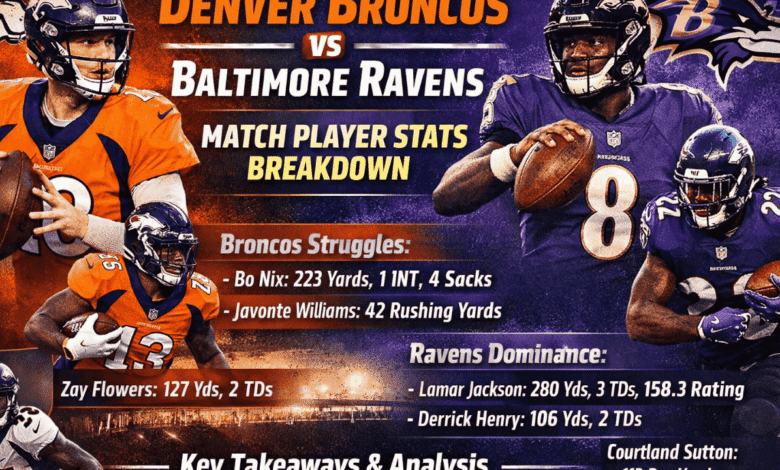
Lamar Jackson set the tone by refusing to play conservative. He targeted the middle of the field, challenged linebackers in coverage, and punished late rotations. Completing 16 of 19 passes for 280 yards and three touchdowns isn’t just efficient; it’s surgical. Denver never forced him into long third downs, which meant Baltimore could run its full playbook without stress.
Once Baltimore built a lead, they didn’t chase style points. They tightened the game, leaned into physicality, and let Denver’s offense implode on its own.
Lamar Jackson’s Night Wasn’t About Flash, It Was About Control
Quarterback stats can lie. This one didn’t. The Denver Broncos vs Baltimore Ravens Match Player Stats around Jackson tell a story of total command. No interceptions. No desperation throws. No visible panic.
Jackson’s perfect passer rating came from discipline as much as talent. He took what Denver’s defense allowed and punished every mistake. When safeties crept up, he went over the top. When edges widened, he escaped without turning broken plays into risks.
What stood out most was decision speed. Denver tried to disguise coverage late, but Jackson was already releasing the ball. That erased Denver’s pass rush before it had a chance to matter.
Derrick Henry Did Exactly What Baltimore Needed
Baltimore didn’t sign Derrick Henry to rack up highlight runs every week. They signed him to close games like this. The Denver Broncos vs Baltimore Ravens Match Player Stats show Henry with 23 carries for 106 yards and two touchdowns, but the timing of those runs mattered more than the total.
Henry punished Denver after they were already reeling. Short-yardage situations became automatic. Second-half drives bled clock and morale. Denver’s defensive front knew what was coming and still couldn’t stop it.
This wasn’t finesse football. It was Baltimore reminding Denver that physical dominance still decides games when execution matches intent.
Zay Flowers Exploited Denver’s Coverage Rules
While Henry handled the grind, Zay Flowers handled the damage. Five catches for 127 yards and two touchdowns doesn’t happen by accident. The Denver Broncos vs Baltimore Ravens Match Player Stats reveal just how badly Denver struggled to adjust to his movement.
Flowers wasn’t beating defenders with size. He won with timing, spacing, and leverage. Denver’s zone coverage left windows open, and Baltimore attacked them repeatedly. Once Denver shifted attention toward him, Jackson simply went elsewhere.
This is what a balanced offense looks like when every threat is credible.
Denver’s Offense Looked Busy, Not Dangerous
On paper, Denver didn’t look completely shut down. That’s where raw numbers mislead. The Denver Broncos vs Baltimore Ravens Match Player Stats show passing yards and drives that moved the ball. They don’t show how rarely those plays mattered.
Bo Nix finished with 223 passing yards, but those yards came under constant pressure. Four sacks and an interception don’t tell the full story. His pocket collapsed quickly, forcing early checkdowns and rushed throws. Baltimore disguised pressure well, baiting Denver into plays that looked safe pre-snap and fell apart post-snap.
Denver struggled to sustain drives. Third downs turned into obvious passing situations, and Baltimore feasted.
Why Denver’s Run Game Never Took Pressure Off the Passing Game
Javonte Williams had 42 rushing yards on 12 carries. That’s not enough to threaten a defense built like Baltimore’s. The Denver Broncos vs Baltimore Ravens Match Player Stats highlight a familiar problem for Denver: the run game exists, but it doesn’t dictate anything.
Baltimore’s linebackers played downhill without fear. Safeties stayed disciplined. Denver never forced Baltimore to adjust its alignment, which made life even harder for Nix.
Without credible balance, Denver’s offense became predictable by halftime.
Courtland Sutton Was Productive, Not Game-Changing
Courtland Sutton did what he could. He found space, won contested catches, and kept drives alive when possible. The Denver Broncos vs Baltimore Ravens Match Player Stats show solid receiving production, but impact matters more than totals.
Baltimore allowed underneath completions because they knew Denver couldn’t consistently convert them into points. Sutton’s catches moved chains but didn’t shift momentum. That’s a defensive win every time.
Defensive Pressure Told the Real Story
Stats often ignore chaos. This game didn’t. The Denver Broncos vs Baltimore Ravens Match Player Stats show Baltimore with four sacks and consistent pressure. Denver managed one sack in response. That imbalance shaped everything.
Baltimore’s defensive line controlled tempo without blitzing recklessly. Denver had to bring extra rushers to create pressure, which left coverage exposed. It was a tactical mismatch that showed up early and never flipped.
Pressure doesn’t always show up as sacks. Here, it showed up as hurried throws, stalled drives, and missed opportunities.
Time of Possession Was a Weapon, Not a Statistic
Baltimore held the ball for nearly 32 minutes. Denver sat just over 28. Those numbers look close until you factor in game state. The Denver Broncos vs Baltimore Ravens Match Player Stats reveal that Baltimore controlled possession when it mattered most.
Late drives weren’t about scoring quickly. They were about removing Denver’s ability to respond. Henry runs, short completions, and safe decisions drained time and belief.
Denver never got a late surge because Baltimore never gave them space.
What These Stats Say About Both Teams Moving Forward
The Denver Broncos vs Baltimore Ravens Match Player Stats don’t suggest a single bad night for Denver or a lucky one for Baltimore. They point to structural differences.
Baltimore plays with clarity. Everyone knows their role. Jackson leads without forcing moments. Denver is still searching for identity. Talent flashes appear, but consistency doesn’t follow.
Until Denver can protect its quarterback, threaten defenses on the ground, and pressure opposing passers without selling out coverage, games like this will repeat.
Why This Matchup Felt Lopsided Even Before the Final Score
Some games feel over before the scoreboard confirms it. This was one of them. The Denver Broncos vs Baltimore Ravens Match Player Stats back up that feeling. Baltimore executed cleaner, adjusted faster, and punished mistakes harder.
Denver fought. That matters. But effort doesn’t close gaps created by preparation and cohesion.
The takeaway isn’t complicated. Baltimore looked like a team built to win in January. Denver looked like a team still learning how to survive November.
FAQs
- Why do the Denver Broncos vs Baltimore Ravens Match Player Stats look closer than the final score suggests?
Because Denver accumulated yards without converting them into sustained scoring drives, while Baltimore maximized efficiency and timing. - Was Lamar Jackson’s performance more about scheme or individual skill?
Both mattered, but his decision-making speed exposed Denver’s defensive rules more than raw athleticism. - Did Denver’s offensive line struggle more than the stats show?
Yes. Pressure came quickly and consistently, forcing rushed decisions even when sacks didn’t register. - How important was Derrick Henry’s role compared to Baltimore’s passing attack?
Henry controlled the second half. Without his physical runs, Denver might have stayed within reach longer. - What’s the biggest warning sign for Denver from this game?
Their inability to dictate tempo on either side of the ball, which showed up clearly across the Denver Broncos vs Baltimore Ravens Match Player Stats.