Luton Outlaws have never tried to be tidy, polite, or easy to package, and that’s exactly why they matter. In a football world smoothed down by PR teams, branded fan zones, and choreographed chants, they represent something stubbornly real. You don’t visit their spaces or hear their name because you want comfort. You go there because you want to know what supporters are actually thinking, not what the club would like them to say.
That honesty makes people uneasy. It also makes the group impossible to ignore.
A Fan Identity That Refuses to Be Managed
The strength of Luton Outlaws comes from one simple decision: staying independent. There is no approval process, no official language, no obligation to soften criticism when things go wrong. That freedom allows supporters to talk about ownership decisions, squad issues, ticket prices, and matchday frustrations without worrying about crossing a line drawn by the club.
This independence creates friction. It also creates trust among fans who are tired of filtered messaging. When Luton Outlaws react to a loss, a controversial signing, or a referee decision, the response feels immediate and human. It mirrors the conversations happening in pubs, cars, and terraces, not boardrooms.
That refusal to be managed is why their influence has lasted while other fan initiatives quietly fade once enthusiasm cools.
Online Spaces Where Opinions Actually Collide
Much of the Luton Outlaws presence lives online, and not in the polished, influencer-driven way modern football discussion often does. Their forums and discussion boards are rough-edged by design. Posts range from tactical arguments to blunt rants written minutes after the final whistle. The tone isn’t curated. That’s the point.
Disagreements don’t get smoothed over. They play out in full view. Long-time supporters clash with newer voices. Optimists argue with cynics. That friction keeps the space alive. It also stops the group from becoming an echo chamber where only one opinion survives.
For supporters who want more than recycled match previews and safe reactions, Luton Outlaws offer something closer to reality. It’s messy. It’s loud. It feels earned.
Matchday Presence Without Formal Structure
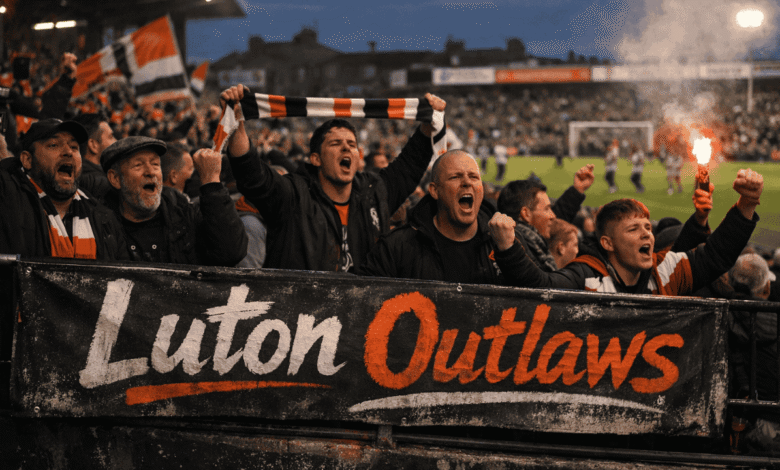
At Kenilworth Road, Luton Outlaws aren’t marked by uniforms, badges, or official banners handed out by the club. Their presence is felt through sound, attitude, and persistence. They travel. They sing. They show up even when results don’t justify optimism.
This kind of support doesn’t need choreography. It feeds on loyalty built over years of promotions, relegations, financial uncertainty, and long nights on cold terraces. When the atmosphere spikes during tense moments, that energy often traces back to the same core supporters who refuse to drift away when football stops being glamorous.
Luton Outlaws thrive in that environment because they never tried to become a brand. They exist to support the club, not to sell an image of support.
Loyalty That Survives Bad Seasons
Anyone can be loud during a promotion push. The real test comes when momentum stalls. This is where Luton Outlaws separate themselves from casual fan movements. They don’t disappear when confidence dips. They argue more. They criticise harder. But they stay.
That persistence matters. Clubs feel it. Players notice it. Even critics who dislike the tone admit the commitment runs deep. When supporters stick around through lean spells, their voices carry more weight when success finally arrives.
This loyalty also keeps the group grounded. They’ve seen enough false dawns to avoid blind optimism. When praise is given, it feels earned. When criticism lands, it usually comes with context drawn from years of watching the same patterns repeat.
Controversy as a Byproduct, Not a Goal
Luton Outlaws attract criticism, often from outside the supporter base. Their language can be sharp. Emotions run hot. Arguments escalate. That reputation follows them, sometimes unfairly, sometimes not.
But controversy isn’t the aim. It’s the byproduct of allowing supporters to speak without filters. Policing tone would weaken the core reason people engage with the group in the first place. Football culture has always included anger, joy, sarcasm, and gallows humour. Stripping that away creates something sterile.
The key difference is accountability within the community. Long-time members call out nonsense. Bad faith arguments get challenged. Nothing is perfect, but the internal pushback keeps things from sliding into chaos.
A Bridge Between Local and Global Supporters
One overlooked aspect of Luton Outlaws is how they connect fans who no longer live near the ground. Supporters who moved away still find a place to argue, celebrate, and stay invested. Time zones change. Kick-off routines shift. The connection holds.
That matters for a club with a scattered supporter base. When fans abroad wake up early to watch a match, they want somewhere to share the experience. Luton Outlaws provide that shared space without demanding loyalty tests or polished commentary.
It’s football stripped back to conversation, and that appeals far beyond the town itself.
Why the Group Still Matters in Modern Football
Football has changed fast. Social media rewards short reactions. Clubs push narratives within minutes of full-time. In that environment, spaces that allow slower, deeper, and sometimes angrier discussion stand out.
Luton Outlaws remain relevant because they don’t chase trends. They didn’t pivot to viral content. They didn’t soften edges to attract sponsors. They stayed useful to supporters who care more about honesty than presentation.
That stubbornness is rare. It’s also why new fans continue to find the group, even if they don’t always like what they see at first.
The Cost of Staying Real
There is a price to pay for refusing polish. Misunderstandings spread easily. Screenshots get shared without context. Critics paint the entire group using the worst examples. Luton Outlaws accept that cost because the alternative feels worse.
Becoming safer would mean becoming forgettable. Football culture is already full of forgettable spaces.
By choosing authenticity over approval, they preserve something older and harder to maintain: supporter-led identity that doesn’t ask permission to exist.
Where Luton Outlaws Sit in Luton Town’s Story
Luton Town’s recent rise has brought attention, money, and scrutiny. As the spotlight grows, unofficial supporter voices become more important, not less. They balance optimism with memory. They remind everyone how fragile success can be.
Luton Outlaws play that role whether they’re praised or criticised. They hold the emotional history of the club in real time, reacting not as marketers or commentators, but as people who’ve lived the journey.
That perspective can’t be manufactured.
A Final Word on Why They Endure
Luton Outlaws survive because they serve a need that official channels never will. They let supporters argue, complain, celebrate, and stay loyal without pretending football is clean or fair. That honesty keeps them relevant, even when it makes people uncomfortable.
If football ever becomes a space where only approved emotions are allowed, groups like this will be the first thing fans miss. The noise, the arguments, the refusal to behave properly—that’s the sound of people who actually care.
FAQs
What kind of supporter is most drawn to Luton Outlaws?
Fans who want open debate and don’t mind disagreement tend to stick around longest. People looking for polished positivity usually drift away.
Do Luton Outlaws influence how the club operates?
Not directly, but consistent supporter pressure and discussion shape the wider mood around decisions and performances.
Is the group welcoming to newer supporters?
Yes, but patience helps. New voices are accepted more easily when they show genuine interest rather than surface-level takes.
Why do discussions there get heated so quickly?
Matches are emotional, and reactions are immediate. The lack of moderation delays creates space for raw responses.
Will Luton Outlaws change as the club grows bigger?
Unlikely. Growth brings attention, but the group’s identity is built on resisting that kind of transformation.