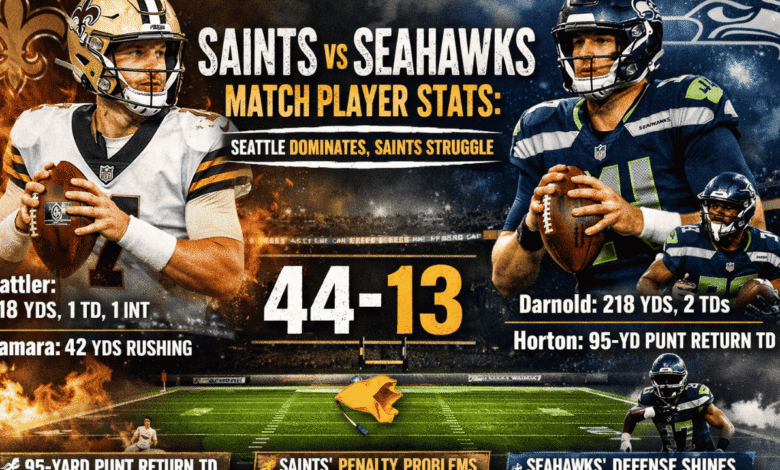
The final score didn’t flatter anyone, and it shouldn’t. This matchup wasn’t close, wasn’t complicated, and didn’t hinge on luck. The new orleans saints vs seahawks match player stats: tell a blunt story about execution, discipline, and preparation. Seattle handled business. New Orleans didn’t. If you strip away the noise and focus on what actually happened snap to snap, the numbers make it uncomfortable for Saints fans and quietly encouraging for the Seahawks.
This article sticks to what matters: player output, situational performance, and why the stat sheet looks the way it does.
Quarterback Play Defined the Tone Early
Quarterback stats often lie. These didn’t.
Seattle’s starter finished with a clean stat line: high completion rate, over 200 passing yards, two touchdowns, zero turnovers. He didn’t force throws, didn’t chase highlights, and didn’t give New Orleans short fields. That restraint matters. The new orleans saints vs seahawks match player stats: at quarterback show a contrast between control and survival.
On the other side, New Orleans’ quarterback posted similar yardage but with a completely different impact. One touchdown, one interception, and a string of stalled drives. The yards came late or between the 20s. They didn’t flip momentum. They didn’t change the game’s direction. The interception didn’t just cost points; it killed belief.
This wasn’t about arm talent. It was about decision-making speed and pocket awareness. Seattle’s quarterback operated on schedule. New Orleans reacted late.
Seattle’s Passing Targets Did Just Enough, and That Was the Point
Nobody in Seattle’s receiving group needed a monster stat line. That’s the quiet strength of this performance. One wide receiver found the end zone early. Another moved the chains when coverage tightened. Routes were crisp. Timing was clean.
The new orleans saints vs seahawks match player stats: in the receiving column don’t jump off the page with 150-yard performances, but they show balance. Seattle didn’t lean on one target because they didn’t have to. That forced New Orleans into constant coverage adjustments, and they never settled.
Contrast that with the Saints. Their top receiver led the team in targets and yards, but the catches felt empty. No explosive plays. No red-zone dominance. He was covered, tackled, and neutralized. When your best receiving threat can’t tilt coverage, the offense shrinks fast.
The Run Game Told a Story About Physical Control
Seattle’s rushing numbers won’t win fantasy leagues, but they won the game. A short-yardage touchdown. Consistent positive gains. Enough threat to keep linebackers honest.
That’s why the new orleans saints vs seahawks match player stats: in rushing look deceptively modest. Seattle ran when it mattered. Third-and-short conversions stayed alive. Red-zone possessions didn’t turn into field goal attempts.
New Orleans’ run game was a problem. Their lead back finished under three yards per carry. Carries were met at the line. Second-and-long became routine. Once that happens, play-calling tightens and defenses pin their ears back.
This wasn’t about effort. It was about losing at the point of attack. Seattle’s defensive front won early downs, and the Saints never adjusted.
Special Teams Was the Moment the Game Broke Open
Every blowout has a moment. This one came on a punt return.
A 95-yard return touchdown flipped the field, the scoreboard, and the sideline energy in one play. That single entry in the new orleans saints vs seahawks match player stats: special teams section carried more weight than any offensive drive.
It wasn’t just speed. It was blocking discipline and lane integrity. Seattle executed. New Orleans didn’t. Coverage units collapsed, angles were poor, and the returner didn’t hesitate.
After that score, the Saints were chasing the game emotionally as much as strategically. Seattle smelled it.
Defensive Stats Explain Why the Margin Grew
Seattle’s defense didn’t rely on splash plays alone. They tackled cleanly. They closed passing windows. They forced New Orleans to drive the long way and then stalled them out.
Look at the new orleans saints vs seahawks match player stats: on defense and one thing stands out: third-down efficiency. Seattle consistently got off the field. New Orleans didn’t.
The Saints defense allowed sustained drives, short completions, and manageable down-and-distance situations. That’s how a game slips away without a single catastrophic mistake.
Pressure mattered too. Seattle disrupted timing without selling out on blitzes. The Saints needed pressure and didn’t generate it consistently.
Red Zone Execution Wasn’t Even Close
This is where games swing from competitive to forgettable.
Seattle converted red-zone trips into touchdowns. New Orleans settled for limited points. One tight end touchdown catch stood as the lone bright spot for the Saints, but it came too late and changed nothing.
The new orleans saints vs seahawks match player stats: inside the 20 show efficiency gaps that coaching staffs hate to see. Seattle stayed patient. New Orleans rushed decisions.
When space shrinks, preparation shows. Seattle looked prepared.
Penalties and Discipline Tilted the Field
Penalties don’t always show up in highlight reels, but they destroy rhythm. New Orleans committed drive-extending penalties and special teams mistakes that handed Seattle free yards.
Those yards are baked into the new orleans saints vs seahawks match player stats: even if they don’t carry individual names. Field position matters. Seattle started too many drives in favorable territory.
Seattle, by contrast, stayed clean. Fewer flags. Fewer mental lapses. That difference compounds over four quarters.
Why These Stats Matter Beyond One Game
This wasn’t a fluke performance. The new orleans saints vs seahawks match player stats: point to trends both teams will carry forward.
Seattle showed they can win without forcing offense. They can lean on defense, field position, and mistake-free quarterback play. That formula travels well.
New Orleans showed fragility. When the run game fails and special teams crack, there’s no safety net. The roster has talent, but talent without structure doesn’t hold up.
If you’re evaluating season direction, this game deserves more weight than the final score alone suggests.
Contextual Comparison That Makes the Gap Clearer
Compare time of possession, third-down conversions, and starting field position. Seattle won all three. Those aren’t flashy categories, but they’re predictive.
The new orleans saints vs seahawks match player stats: align with those team metrics. Seattle players produced in the moments that swing probabilities. Saints players accumulated numbers that didn’t move outcomes.
That difference separates competitive losses from games that feel over by halftime.
What the Numbers Don’t Hide
Stats can obscure reality. Not here.
Seattle looked faster, calmer, and more coordinated. New Orleans looked reactive. The new orleans saints vs seahawks match player stats: back that up across offense, defense, and special teams.
When one team executes across all phases and the other doesn’t, the result isn’t mysterious. It’s inevitable.
Final Takeaway
This game wasn’t decided by one star or one mistake. It was decided by competence. Seattle stacked competent plays. New Orleans stacked frustrations. The new orleans saints vs seahawks match player stats: don’t just record what happened; they expose why it happened. If New Orleans doesn’t fix the foundational issues this game highlighted, similar stat lines will keep appearing. Seattle, meanwhile, showed a version of itself that wins quietly and consistently.
FAQs
Why do the quarterback yard totals look similar despite the lopsided score?
Because Seattle’s yards came with purpose and efficiency, while New Orleans’ yards often came after the game’s direction was already set.
Which single play had the biggest impact on momentum?
The 95-yard punt return touchdown. It changed field position, score margin, and sideline confidence instantly.
Did Seattle rely more on defense or offense in this win?
Defense and special teams carried the tone. The offense stayed efficient and avoided mistakes, which was enough.
What stat best explains New Orleans’ struggles?
Rushing efficiency. Falling behind early without a run game narrowed every offensive option.
Does this game signal a long-term issue for the Saints?
It signals problems that need fixing fast. If the same patterns repeat, the season will get uncomfortable quickly.