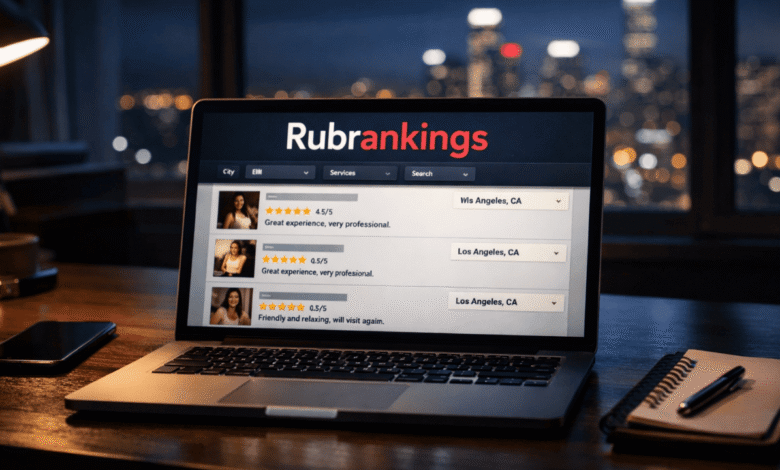
People don’t visit Rubrankings out of curiosity. They visit because they’re trying to make a decision, fast, with limited trust and uneven information. That pressure shapes how the platform is used and why it continues to attract attention despite criticism. Strip away the surface noise and what’s left is a revealing case study in how niche directories actually function when money, reputation, and discretion are all on the line.
Why Rubrankings Keeps Pulling Traffic Despite Its Reputation
Rubrankings survives for one simple reason: it solves a problem that mainstream platforms refuse to touch directly. Traditional review sites draw a hard line around massage services, especially when providers operate near legal or cultural gray zones. That leaves a vacuum. Rubrankings fills it with speed, blunt user commentary, and minimal friction.
Search behavior tells the story. Users arrive with intent, not idle browsing. They want location-based results, recent feedback, and signs that a listing is active. Rubrankings prioritizes those needs over polish. Profiles are direct. Reviews aren’t sanitized. The experience feels closer to a message board than a wellness marketplace, and that’s intentional.
Critics often focus on credibility, but credibility isn’t binary here. Users don’t expect perfection. They expect patterns. When three reviews mention the same behavior or issue, that carries weight. Rubrankings thrives on that kind of pattern recognition, even when individual posts are flawed.
The Review Economy and How Power Shifts on Rubrankings

Unlike mainstream platforms where moderation and brand safety dominate, Rubrankings places disproportionate power in the hands of users. That power cuts both ways. Providers live and die by reputation, sometimes unfairly. A single negative post can linger for months, especially in smaller markets.
At the same time, providers who understand the system can benefit. Consistent service, clear boundaries, and predictable communication often translate into stable feedback. Rubrankings rewards reliability more than charm. Flashy listings don’t hold up if follow-up reviews contradict them.
There’s also an unspoken hierarchy among reviewers. Detailed posts with specific timelines, pricing context, and behavior notes carry more influence than vague praise. Regular users recognize those voices. Rubrankings quietly trains its audience to read between the lines.
Legitimacy Isn’t the Right Question, Utility Is
People arguing about whether Rubrankings is legitimate miss the point. The more useful question is whether it’s effective for the task users bring to it. For many, the answer is yes, with conditions.
Rubrankings isn’t built to protect anyone’s feelings. It’s built to surface unfiltered experience. That makes it uncomfortable for providers who prefer controlled branding, but attractive to users who value warning signs over marketing language.
The platform also reflects the uneven reality of the industry it hosts. Some listings represent licensed professionals. Others operate in murkier territory. Rubrankings doesn’t resolve that tension. It exposes it. That exposure is the product.
How Location Shapes the Rubrankings Experience
Rubrankings behaves differently depending on geography. In dense metro areas, listings turn over quickly. Reviews update often. Competition pushes providers to respond to feedback, even if indirectly. In smaller cities, the dynamic shifts. Fewer listings mean reviews carry more weight, and reputation sticks longer.
Urban users tend to cross-check information across platforms. Suburban and rural users rely more heavily on Rubrankings alone. That reliance amplifies both the value and the risk of the information presented.
This geographic split also affects moderation pressure. High-traffic areas generate more content, which dilutes the impact of any single review. Low-traffic areas magnify it. Rubrankings doesn’t level that playing field, and it likely never will.
Trust Signals Users Actually Pay Attention To
Despite the platform’s rough edges, users develop their own trust filters. Certain signals matter more than others.
Recent activity outweighs star averages. A profile with five glowing reviews from three years ago triggers skepticism. Consistent posting over time builds confidence, even if ratings fluctuate.
Language patterns also matter. Overly polished praise raises suspicion. Blunt, imperfect writing feels more honest to regular readers. Rubrankings unintentionally rewards authenticity by allowing messiness.
Photos, while present, rank lower in importance than behavioral details. Users care less about aesthetics and more about professionalism cues, communication style, and adherence to stated terms. Rubrankings reflects that priority.
The Quiet Risks Users Underestimate
While concerns about scams get attention, subtler risks often go unnoticed. Personal data exposure is one. Users who post identifiable details in reviews sometimes don’t realize how searchable that information becomes over time.
There’s also the risk of outdated assumptions. A provider’s situation can change quickly. Ownership shifts, management changes, relocations. Rubrankings doesn’t always surface those transitions clearly, which can lead to mismatched expectations.
Finally, there’s emotional risk. Negative experiences documented in stark language can shape perceptions before any interaction happens. Users who rely too heavily on Rubrankings without context may carry unnecessary bias into real-world decisions.
How Providers Navigate Rubrankings Without Burning Out
Providers who last on Rubrankings tend to adopt a detached mindset. They monitor feedback without chasing every comment. They understand that not every review deserves a response, and that silence can sometimes be the smarter move.
Those who attempt to game the system rarely succeed long-term. Artificial praise stands out. Patterns expose manipulation. Rubrankings users are more skeptical than they appear.
The most resilient providers focus on consistency rather than image repair. Over time, that approach stabilizes reputation, even in the face of occasional criticism.
Rubrankings Compared to Mainstream Platforms
The contrast between Rubrankings and mainstream review sites isn’t subtle. Traditional platforms prioritize advertiser comfort, legal caution, and broad appeal. Rubrankings prioritizes immediacy and specificity.
That doesn’t make one better across the board. It makes them serve different purposes. Users frustrated by filtered language elsewhere often land on Rubrankings precisely because it feels raw.
The downside is obvious. Less oversight means more noise. But for users who know how to filter that noise, Rubrankings offers information they won’t find elsewhere.
Why Rubrankings Sparks Strong Reactions
Strong reactions usually signal relevance. Rubrankings sits at the intersection of trust, privacy, and personal decision-making. It exposes how people actually evaluate services when formal systems fail them.
Supporters defend its usefulness. Critics point to its flaws. Both are right. Rubrankings isn’t trying to be respectable. It’s trying to be used.
That clarity explains its staying power more than any feature list ever could.
The Real Takeaway
Rubrankings isn’t a guidebook or a safety net. It’s a mirror. It reflects user behavior, industry tension, and the limits of crowd-sourced judgment without apology. Anyone approaching it expecting certainty will be disappointed. Anyone approaching it as one input among several will likely find value.
The challenge isn’t deciding whether Rubrankings is good or bad. The challenge is learning how to read it without surrendering your judgment.
FAQs
What makes reviews on Rubrankings feel different from other platforms
The lack of heavy moderation leads to more direct language and fewer marketing-style posts, which changes how users interpret credibility.
Can providers remove negative reviews on Rubrankings
Removal is rare unless posts violate clear rules. Most providers adapt by focusing on future feedback rather than erasing past criticism.
How often does information on Rubrankings become outdated
Listings can change quickly, especially in smaller markets. Users should pay close attention to review dates and recent activity.
Is it risky to leave detailed reviews on Rubrankings
Detailed posts can be useful but may expose personal patterns. Users should avoid sharing identifiable habits or schedules.
Why do people keep using Rubrankings despite complaints
Because it delivers situational insight that sanitized platforms avoid, and for many users, that trade-off feels worth it.